
Algae-based feed production by a young woman from Dorud

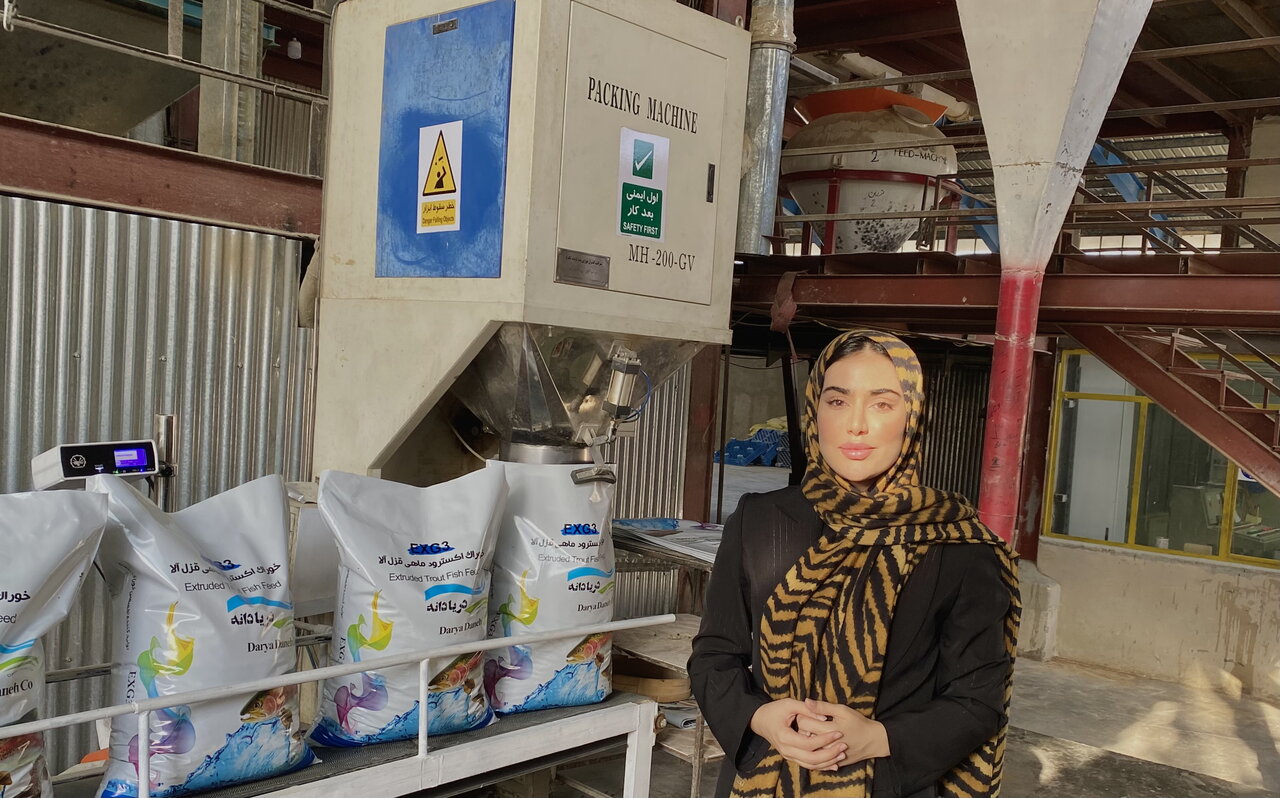
Production of Algae-Based Aquaculture Feed by a Young Woman from Dorud
Zahra Saki, a creative and motivated young woman from Dorud, has produced algae-based aquaculture feed for the first time in the country. She says that she developed this product with an export-oriented approach and with the goal of increasing foreign currency earnings.
Fars News Agency – Lorestan – Nasrin Safar-Biravand
Zahra Saki, a 21-year-old woman who studied fisheries, comes from a family active in the aquaculture feed industry. She entered this field because of her interest in aquaculture and feed production.
This young creative and technology-oriented entrepreneur, who is also active in aquaculture exports, decided to develop a feed product that could contribute to producing higher-quality fish meat, taking into consideration the preferences of foreign consumers.
Saki believes that if technology-based and knowledge-based companies have sufficient working capital, they can play a significant role in production and employment.
Fars News Agency conducted an interview with this young creative entrepreneur on the occasion of her development of algae-based aquaculture feed. The following is the interview:
How did you come up with the idea of producing algae-based feed?
I work in the laboratory department of the company, and we are also in contact with fish farmers. Another important point is that we are active in aquaculture exports. For our Russian customers, the firmness and texture of fish meat are particularly important.
At the same time, meat quality is also important to consumers. Considering that an important part of fish meat quality is related to feed, while another part is related to water and oxygen, and since we are also active in aquaculture feed production, I proposed the idea of using algae as a marine plant-based protein source.
When did you propose this idea, and how long did it take?
I started working on the idea about a year ago.
How far has the project progressed?
So far, we have completed the research and laboratory tests. Fortunately, the results have been successful, and we are now looking to move toward production and commercialization in the near future.
So, the results have been positive?
Yes, they have.
What are the advantages of the feed you have developed?
Algae improves the quality of the fish meat.
Is your feed intended for juvenile fish or adult fish?
Our main target and plan is juvenile fish because the feed can help strengthen the immune system and reduce mortality. It can also increase appetite and fish growth. Another important point is that it can improve digestion in fish.
Does that mean it is not suitable for growing fish?
No. However, considering the relatively high price of this feed, using it for juvenile fish is more economically beneficial. Since this is an important stage in the life cycle of fish, the product can have greater results and applications at this stage.
In fact, you have introduced an innovation in this field?
Yes. We are currently a technology-oriented company, and if the idea is patented, our company can be upgraded to a knowledge-based company.
Have you thought about the market for the feed you are producing?
As I mentioned, our focus is on fish intended for export markets, with the aim of generating foreign currency for the province.
Considering that Lorestan is an important center for cold-water fish farming, we believe that we can have an important role in this field. Of course, we are also considering other provinces.
Has a similar feed been produced in the country?
As far as I know, algae-based aquaculture feed has not been produced in the country. We are also working toward mass production and bringing the product to the market.
How much did you start with?
We started developing this product experimentally and for research purposes with approximately 100 million rials (1 million tomans).
Does producing this feed require machinery and equipment?
For research and experimental production, we produced it manually. However, mass production requires machinery and equipment.
If you want to reach mass production, how much investment would be required?
Considering that we already have machinery and equipment at the factory, we would need approximately 10–20 billion rials (1–2 billion tomans) to start.
If you reach mass production, how much employment could it create?
At Daryadaneh factory, which is the largest aquaculture feed producer in western Iran, approximately 20 to 25 people are currently employed directly, while around 50 people are employed indirectly.
However, if this product reaches mass production, employment could increase to approximately 200 people.
So, do you have the capacity for mass production?
In terms of technical capability and machinery, yes, we have the capacity for mass production.
The problem we currently face is working capital. In other words, we are experiencing a shortage of liquidity. Otherwise, our technical and scientific capabilities are strong.